things to know about bees!
bees evolved from wasps and plants evolved to flower. plants began enticing wasps, who were much more efficient at pollenating than the plants themselves, using bright colours and nectar. wasps developed adaptations that allowed them to better access that nectar, which resulted in modern day bees (ex. fuzzy bodies). there wouldn't have been bees without flowers and there wouldn't have been flowers without bees.

male bees don’t have dads and die a lot. their only purpose is to fuck the other bees, which kills them immediately. they’re called drones. drone eggs are unfertilized, which means female bees don’t need sperm to lay a drone egg (DADLESS).
female bees run the show. fertile ones have a mating flight once, then store male bee sperm for the rest of their lives. they can choose whether an egg will be fertilized or not, controlling their population carefully. infertile females are responsible for foraging and hive maintenance.
female bees run the show. fertile ones have a mating flight once, then store male bee sperm for the rest of their lives. they can choose whether an egg will be fertilized or not, controlling their population carefully. infertile females are responsible for foraging and hive maintenance.
cool kinds of bees!
| mason bees 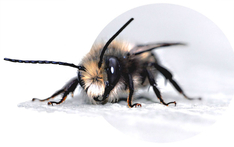 | the solitary bee. bashful and unlikely to sting. females can sting (repeatedly – stingers aren’t barbed) but it’s pretty much unheard of. mason bees don’t have hives or queens or workers or honey or beeswax. that being said, all females are fertile (we’ll get into that with the other kinds of bees later) so each individual bee is responsible and equipped for reproduction. they’re immune to varroa mites (the little demons primarily responsible for the rapid decline of the honey bee), but have their own ailments. females will find small preexisting crevices to inhabit while they lay their eggs – natural or man made, preferably tube-like. they stuff the crevice with pollen and nectar, lay their eggs on top of the provisions and seal the entrance. they might do this a few times within their lifespan. the cold of winter kills off mama bee, but the eggs survive and her children emerge next spring. males come out first, wait for females, then mate (ya, it's potentially incest). as you already know, male bees go die immediately after sex and female bees pollinate pretty things and repeat the cycle. |
| bumblebees 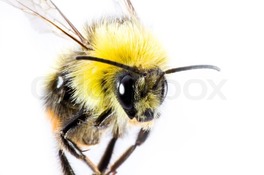 | bumblebees are social, but nothing compared to honeybees (coming up next). their colonies are quite small (~50 per nest) and are often underground. females can also sting repeatedly but, again, mostly ignore humans. bumblebees are probably the cutest because they’re fuzzy and have long tongues for drinking nectar. workers can lay haploid eggs (one set of chromosomes, always turn into drones). only queens can lay diploid eggs, which develop either into workers or queens. female worker bees remain in the colony to care for the queen and her eggs when they're young, then are sent out to forage as they age. male drones are forced outside to mate and die. workers and virgin drones die when the temperature drops anyway, so colonies only survive one year. the species survives through its queens alone. the colony queen secretes a pheromone that stunts other female bee development at the worker class – sometimes she will choose not to secrete this pheromone and feed the larvae in excess. these workers will continue to develop into queens in the autumn, after their service stage. these new queens eat a lot to survive the winter in a resting state (diapause) underground until spring, when they wake up and go-it-alone to find a suitable space to lay eggs and create their own colony, repeating the cycle. |
| honey bees 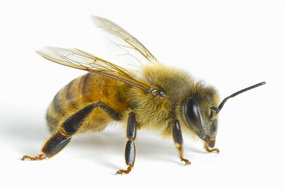 | these bees are really cool looking and efficient and live in huge colonies and (obviously) make honey, yum. i also know the most about them because i took a course on keeping them and tended a couple of hives. when honeybees sting, they die, which seems pretty noble. also, they release a pheromone when they sting that tells the other bees that there’s something worth stinging, so you’re likely to get stung more than once if you threaten a colony. like bumblebees, there are three classes – workers (always female), drones (always male) and queens (extra strong, special females) and the hive functions the same in terms of responsibilities. the queen secretes pheromones that stop worker bees from laying any eggs at all (unlike bumblebee workers, who can lay drones) – workers only lay eggs if they’re queenless because the pheromone is absent, in which case they start frantically pumping out drones in hopes of repopulating the colony. it doesn’t do much aside from spread the colony's genes to other hives, because workers can only lay males, female eggs are needed to create a queen and a colony cannot last without one. if you are a bee keeper, this is't necessarily the death of your hive though. you can introduce a new queen (you can seriously order bees via regular mail) or insert a frame with queen brood from another hive and the workers will tend to it until she emerges. to make a honey bee queen, you need to feed a lady honey bee special royal jelly. my very favourite trait of the honey bee is that it dances to communicate, which is both adorable and highly intelligent. by strutting and wiggling their little insect behinds, they're showing the rest of the colony where a rich food supply is (the direction of the dance communicates location via angle in relation to the sun - which, keep in mind, is always moving and needs to be factored into communications - and the length of the dance indicates the distance of the site). more bees go check it out and, if it's good, will come back and start groovin' with the first bee to indicate their support and encourage others to head over. eventually supplies deplete and a bee comes back empty handed. this bee breaks up the party and the colony ceases dancing (until next time). honey bee colonies can grow to a population of ~80,000. queens typically live 3-4 years and workers will huddle around her to keep her warm over winter, meaning the colony is sustained year-to-year. as you probably guessed, no men last the winter. |
| killer bees 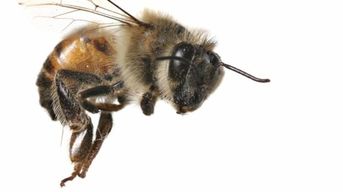 | or africanized honey bees. okay, these are technically a type of honey bee but their behavior toward people and animals is entirely different, so they get their own blurb. killer bees look basically the same as your average honey bee - just a touch smaller. they are descendants of southern aftrican bees and inhabit south and central america. african bees were originally brought to brazil in hopes of introducing a honey bee better adapted to tropics. the bees escaped quarantine during the testing period and bred with some south american bees. the result was a super aggressive, hive minded species. killer bees attack in swarms and pursue targets at greater distances. things as small as a sound or vibration in what they perceive to be their territory (a quarter of a mile) can be perceived as threats and targeted. the bees remain agitated for 24 hours. although they aren't any more poisonous than your regular bee, they attack 10x faster and swarm a target, resulting in significantly more stings. |
bees for you!
bees are dwindling so, first and foremost, be nice to them! you don’t have to keep them, but don’t kill them. plant things they like. let them have their hive. let them pollinate your flowers. if you don’t fuck with them, they probably won’t fuck with you.
 | then there's lazy beekeeping! put out a mason bee home! mason bees will likely find it and live in it. it won't get too crowded, as mason bees don't live in colonies. the bees that emerge will be gentle. the structure requires little to no maintenance from year-to-year (maybe the occasional cleaning) and can cost as little as $20. your yard will have a faint buzzing sound and your fruits and flowers will rejoice. |


my last and most hands-on suggestion is to have a hive. honey bee hives require weekly maintenance, but they’re really fun. you will get stung, but quite infrequently and it really doesn't really hurt all that much. there is a lot to learn and i certainly don't know it all. i'd advise that you take a class, read a book and i basically insist that you keep in touch with your local beekeeping community if you have a hive of your own. beekeepers will often share concerns, strategies and advice - the enemies of the bee are constantly evolving, therefore it's essential to chat with others about pest prevention and effectiveness (whether you're open to chemical treatments or not) in your area. you'll need to spend about $500 on equipment and bees to get set up if you choose to purchase everything for your hive. your frames will be swarming (pictured above), so if that thought makes you squeamish, this option probably isn't for you. that being said, honey bees are typically gentle, especially on the frame. you can harvest the honey humanely, so long as you leave enough to get the bees through the winter and, honestly, they don't really mind you taking it. when it comes down to it, bees are just really fascinating to observe and the world needs them.
okay, so please continue to love the bees and i'll see you next time!
- sydney
- sydney