A few summers after I graduate, I return to my alma mater as a camp counselor. I have six teenagers in a group all my own, and I am to spend the week living in a dorm with them and ushering them between acting and writing workshops. There is, for once, someone else to shelter under the umbrella; I am truly responsible for other people for the first time in years. I quickly grow attached. Some of the kids are passionate so outwardly it’s clear they’ve had to defend their interests in the past. The only boy in my group tells me he “really needs to make a good first impression” with the theatre professor offering workshops in Shakespearean speech, and he out-oos and ays the rest of the group, swinging his arms more wildly than the intimidated girls, shouting improvised lines—“You’re being abusive!”—during a pantomimed fight. Three different campers apologize for talking to me “too much.” “You’re probably sick of my voice,” one says on the first night. I’m not.
“My heart is broken,” I tell my boyfriend over the phone after staff orientation. The campers don’t arrive until the next morning, so I’m stupid drunk, having piled into another counselor’s car to go to the closest pizza shop and buy one six-pack each. It’s Sunday, limiting our options for liquor. In the spirit of dorm life, I spend $11 on some Smirnoff Ice and down it trying to bond with the other counselors in the twisted old college way they proposed. It is my first time ever drinking in a dorm.
My heart is broken, by association, after the first day ends and we adults make rounds through the cinderblock dorm building all night. One of the girls in my group had a roll sprinkled with cinnamon for lunch. “I had a big breakfast,” she says, like what was happening wasn’t absolutely clear to the other female campers and the counselors, us veteran girls. At dinner, she talks eagerly about YouTube makeup tutorials, then discusses neuroscience with a girl who has already had me call her mom to bring her another book. “Just Google ‘neurotransmitters’ and you’ll find tons of stuff. I’ve read so much about them,” she whispers across the table. Heartbreak.
Some of the campers forget to bring extra clothes to the pool, so I run them back to the dorm through the rain. My soggy sneakers adorn a corner of my single room for the rest of the week, lined up parallel to the dead roach along the wall. The next day, one of my girls asks if she can use her pool time to talk to me instead, and we sit on the floor with the roach in the middle. She tells me about her parents, her role models, her friends and former friends, the trajectory of her life as projected at sixteen, and I’ve heard some iteration of this so many times I can listen instead of cry. I know the stories; these girls are still writing them, still surprised by the plot twists.
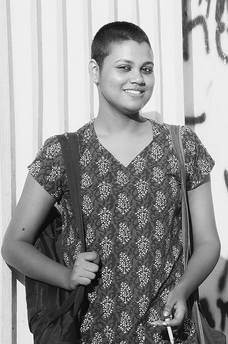
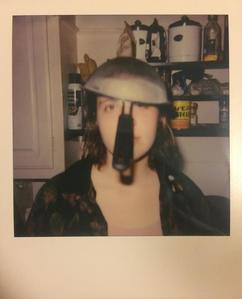
It’s amazing how fresh and vivid teenagers’ wounds are. Their hair is cropped short and dyed purple, their T-shirts plastered with neon band names I’m already too old to recognize. One girl’s shirt reads in big, white letters: BLAME SOCIETY. They struggle to be praised, to be read as mature, to come across as intelligent. A theatre professor eats dinner with my group after a session, and my girls impress him with their criticism of school dress codes: “We laugh about it all the time, how the school can’t handle our sexy shoulders. Boys in gym shorts are distracting, but no one says a thing about that!” Then, clockwork, the internalized hatred fired back out into the world: “a promiscuous girl,” “and you could see her underwear—on purpose!”, “the cheerleaders…” The few boys at the camp segregate themselves, downing plates of college food at the next table over. The girls nervously eye the rest of the group when practicing walking with a chest-lead around an emptied event area during an acting session. “Now try a head-lead!” and they all fix their shirts in relief. It hurts so badly to become a girl. It was probably just as clear when I was in the center of it.
One of my girls tells me, and later several workshop leaders, “I wrote a little short story while we were sitting in the lobby,” and I think of myself filling notebook after notebook with scribbles, heinous poetry, character sketches, vague journal entries written in code, most often just to fill the pages. “That’s smart, can I take that for my notebook?” the most outspoken girl of the bunch asks another at lunch. Flattered, the speaker of course agrees, and the quip is recorded in cursive on the first page of a brand-new notebook designated specifically for camp. When I moved out of my parents’ house, I threw stacks of such notebooks directly into the recycling bin, my ninth-grade self too raw to stomach, so deep In It I could barely translate. My charges this week have the distinct auras of being In It still, in that rough part of growing where you’re unsure of yourself but desperate to please. I ask my campers what genres they like to write, meaning fiction, nonfiction, or poetry. “Fantasy,” one tells me; “Science fiction,” responds another. “Really, really complex stuff,” says a third, and I cringe, cringe, cringe, not because I’m embarrassed on their behalf—they’re just starting out; they’re safe; they’re among friends, as they say—but because I can feel a smaller version of me there with them, the one who wrote poems that hurt me to read a decade later.
How much smaller, really, is that person, though? Here she is, though more tools are available to her now. Intimidated by the other counselors, her indifferent peers, she starts in on her camp paycheck with a six-pack she downs in one night, lining up the bottles on the dorm windowsill, sharing her curated set of impressive stories, letting them out drunkenly a little at a time before getting emotional, as desperate as any camper to stand out, to be heard. I carry her downstairs to her single and lock the door, but she calls my boyfriend, overwhelmed with tears, and announces her preemptive heartbreak. Once the campers arrive and are each directed through their counselors’ hangovers to their rooms, my focus thankfully shifts off myself and off her—possible now that I’ve long graduated from my teenage years—to my crippling responsibility for these hesitant souls.
No one remembers her camp counselors. I had the same thought when I was, ill advisedly, an elementary education major at the beginning of college, first having the experiences that built up my library of horrible confidences from children and young people. Who remembers her student teachers, her assistant religious education instructor, the girl that walked them from session to session at a one-week summer camp when she was sixteen? But, maybe with a touch of that teenage self-obsessed quality, I believe I can do something real for my campers, even as a temporary role model: I can show these girls that they will come out the other side, that this part of their lives is as transient as my relevance to them: isn’t it?
“My heart is broken,” I tell my boyfriend over the phone after staff orientation. The campers don’t arrive until the next morning, so I’m stupid drunk, having piled into another counselor’s car to go to the closest pizza shop and buy one six-pack each. It’s Sunday, limiting our options for liquor. In the spirit of dorm life, I spend $11 on some Smirnoff Ice and down it trying to bond with the other counselors in the twisted old college way they proposed. It is my first time ever drinking in a dorm.
My heart is broken, by association, after the first day ends and we adults make rounds through the cinderblock dorm building all night. One of the girls in my group had a roll sprinkled with cinnamon for lunch. “I had a big breakfast,” she says, like what was happening wasn’t absolutely clear to the other female campers and the counselors, us veteran girls. At dinner, she talks eagerly about YouTube makeup tutorials, then discusses neuroscience with a girl who has already had me call her mom to bring her another book. “Just Google ‘neurotransmitters’ and you’ll find tons of stuff. I’ve read so much about them,” she whispers across the table. Heartbreak.
Some of the campers forget to bring extra clothes to the pool, so I run them back to the dorm through the rain. My soggy sneakers adorn a corner of my single room for the rest of the week, lined up parallel to the dead roach along the wall. The next day, one of my girls asks if she can use her pool time to talk to me instead, and we sit on the floor with the roach in the middle. She tells me about her parents, her role models, her friends and former friends, the trajectory of her life as projected at sixteen, and I’ve heard some iteration of this so many times I can listen instead of cry. I know the stories; these girls are still writing them, still surprised by the plot twists.
It’s amazing how fresh and vivid teenagers’ wounds are. Their hair is cropped short and dyed purple, their T-shirts plastered with neon band names I’m already too old to recognize. One girl’s shirt reads in big, white letters: BLAME SOCIETY. They struggle to be praised, to be read as mature, to come across as intelligent. A theatre professor eats dinner with my group after a session, and my girls impress him with their criticism of school dress codes: “We laugh about it all the time, how the school can’t handle our sexy shoulders. Boys in gym shorts are distracting, but no one says a thing about that!” Then, clockwork, the internalized hatred fired back out into the world: “a promiscuous girl,” “and you could see her underwear—on purpose!”, “the cheerleaders…” The few boys at the camp segregate themselves, downing plates of college food at the next table over. The girls nervously eye the rest of the group when practicing walking with a chest-lead around an emptied event area during an acting session. “Now try a head-lead!” and they all fix their shirts in relief. It hurts so badly to become a girl. It was probably just as clear when I was in the center of it.
One of my girls tells me, and later several workshop leaders, “I wrote a little short story while we were sitting in the lobby,” and I think of myself filling notebook after notebook with scribbles, heinous poetry, character sketches, vague journal entries written in code, most often just to fill the pages. “That’s smart, can I take that for my notebook?” the most outspoken girl of the bunch asks another at lunch. Flattered, the speaker of course agrees, and the quip is recorded in cursive on the first page of a brand-new notebook designated specifically for camp. When I moved out of my parents’ house, I threw stacks of such notebooks directly into the recycling bin, my ninth-grade self too raw to stomach, so deep In It I could barely translate. My charges this week have the distinct auras of being In It still, in that rough part of growing where you’re unsure of yourself but desperate to please. I ask my campers what genres they like to write, meaning fiction, nonfiction, or poetry. “Fantasy,” one tells me; “Science fiction,” responds another. “Really, really complex stuff,” says a third, and I cringe, cringe, cringe, not because I’m embarrassed on their behalf—they’re just starting out; they’re safe; they’re among friends, as they say—but because I can feel a smaller version of me there with them, the one who wrote poems that hurt me to read a decade later.
How much smaller, really, is that person, though? Here she is, though more tools are available to her now. Intimidated by the other counselors, her indifferent peers, she starts in on her camp paycheck with a six-pack she downs in one night, lining up the bottles on the dorm windowsill, sharing her curated set of impressive stories, letting them out drunkenly a little at a time before getting emotional, as desperate as any camper to stand out, to be heard. I carry her downstairs to her single and lock the door, but she calls my boyfriend, overwhelmed with tears, and announces her preemptive heartbreak. Once the campers arrive and are each directed through their counselors’ hangovers to their rooms, my focus thankfully shifts off myself and off her—possible now that I’ve long graduated from my teenage years—to my crippling responsibility for these hesitant souls.
No one remembers her camp counselors. I had the same thought when I was, ill advisedly, an elementary education major at the beginning of college, first having the experiences that built up my library of horrible confidences from children and young people. Who remembers her student teachers, her assistant religious education instructor, the girl that walked them from session to session at a one-week summer camp when she was sixteen? But, maybe with a touch of that teenage self-obsessed quality, I believe I can do something real for my campers, even as a temporary role model: I can show these girls that they will come out the other side, that this part of their lives is as transient as my relevance to them: isn’t it?
✱✱✱
| Sarah Kennedy lives in Troy, NY with two small cats she overwhelms with her feelings. @lynchiansarah |